Introduction
Islam is not just a belief system — it is a way of life.
At the heart of Islamic practice are five essential acts of worship known as:
The Five Pillars of Islam
These pillars form the foundation of a Muslim’s faith and daily life. They structure a Muslim’s relationship with:
- God
- Society
- Wealth
- Self-discipline
- The global Muslim community
Understanding the Five Pillars helps you understand how Islam is lived in practice.
What Are the Five Pillars?
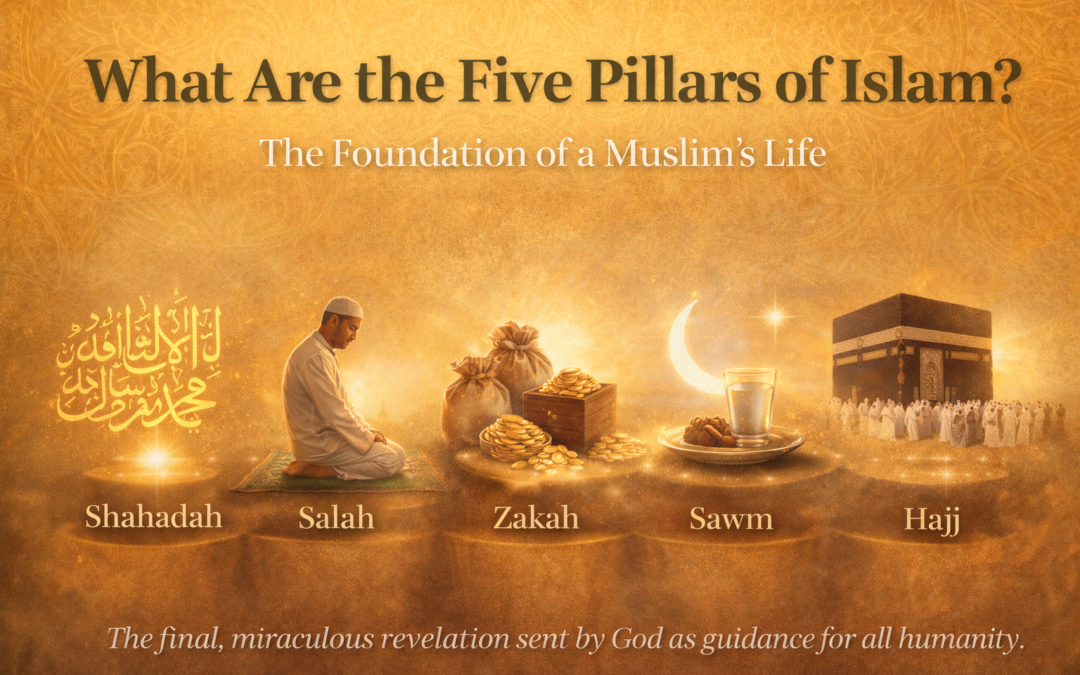
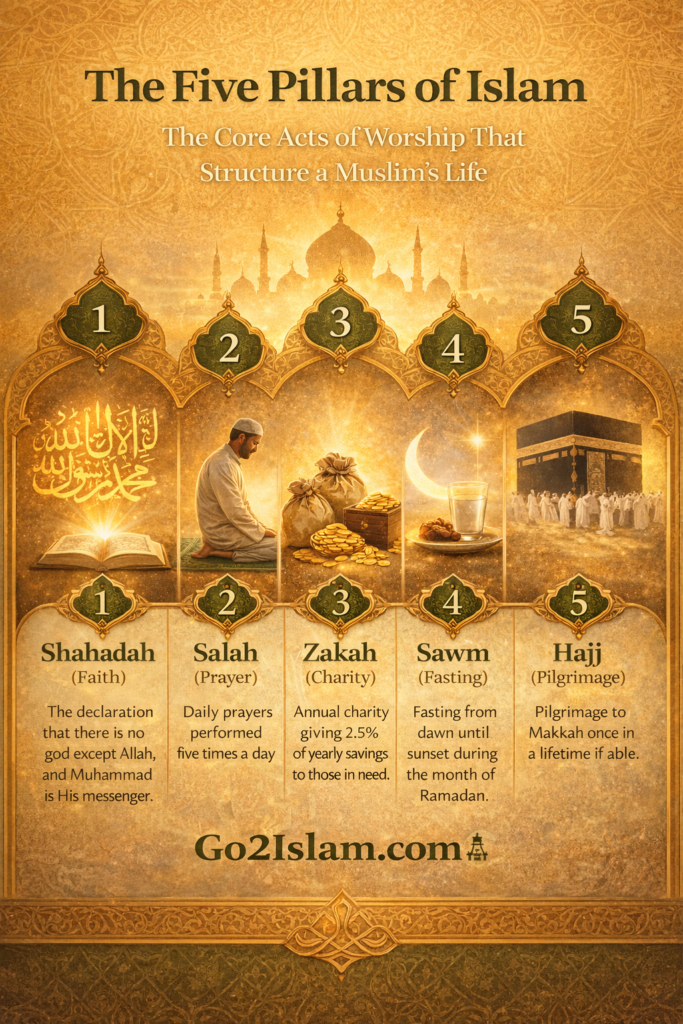
The Five Pillars of Islam are:
- Shahadah – Declaration of Faith
- Salah – Daily Prayer
- Zakah – Charity
- Sawm – Fasting in Ramadan
- Hajj – Pilgrimage to Makkah
They are called “pillars” because they support the structure of a Muslim’s life — just as pillars support a building.
1️⃣ Shahadah – The Declaration of Faith
The first pillar is the most important.
It is the statement:
“There is no god worthy of worship except Allah, and Muhammad is the Messenger of Allah.”
This declaration means:
- Worship only One God
- Accept Muhammad ﷺ as the final prophet
The Shahadah is not just words — it represents a shift in belief and purpose.
When someone sincerely believes and says this statement, they enter Islam.
It establishes:
- Monotheism (Tawheed)
- Direct worship of God
- Accountability to the Creator
Without this foundation, the other pillars have no meaning.
2️⃣ Salah – The Five Daily Prayers
Muslims pray five times a day:
- Fajr (before sunrise)
- Dhuhr (midday)
- Asr (afternoon)
- Maghrib (sunset)
- Isha (night)
Prayer in Islam is not optional — it is a daily spiritual reset.
Through prayer, a Muslim:
- Remembers God
- Seeks forgiveness
- Expresses gratitude
- Refocuses on purpose
Prayer includes:
- Standing
- Bowing
- Prostrating
- Reciting verses from the Qur’an
It creates discipline and spiritual awareness throughout the day.
3️⃣ Zakah – Charity and Social Responsibility
Zakah is an obligatory form of charity.
Muslims who meet a minimum wealth threshold give:
2.5% of their savings each year
This money goes to:
- The poor
- The needy
- Those in debt
- Social welfare causes
Zakah purifies wealth and reduces inequality.
Islam does not see wealth as evil — but as a responsibility.
Through Zakah:
- Wealth circulates
- Society strengthens
- Compassion becomes institutionalised
4️⃣ Sawm – Fasting During Ramadan
During the month of Ramadan, Muslims fast from:
- Dawn until sunset
- No food
- No drink
- No marital relations
Fasting is not only physical — it is spiritual training.
It builds:
- Self-control
- Gratitude
- Empathy for the poor
- Awareness of God
Ramadan also strengthens community, as families and mosques gather for nightly prayers and meals.
The Qur’an was first revealed during Ramadan, making it a sacred month of reflection.
5️⃣ Hajj – Pilgrimage to Makkah
Hajj is a pilgrimage to Makkah that every Muslim must perform once in their lifetime — if physically and financially able.
Each year, millions gather in unity.
During Hajj:
- People wear simple white garments
- Social status disappears
- Race and nationality become irrelevant
Pilgrims perform rituals tracing back to Prophet Abraham.
Hajj symbolises:
- Equality
- Humility
- Unity of humanity
- Submission to God
It is one of the largest peaceful gatherings in the world.
Why Are the Five Pillars Important?
The Five Pillars:
- Structure a Muslim’s life
- Balance belief with action
- Combine spirituality and social responsibility
- Build discipline and humility
Islam is not faith alone — nor action alone.
It is belief supported by consistent practice.
The Balance Between Worship and Life
What makes the Five Pillars powerful is balance:
- Prayer connects you to God daily
- Charity connects you to society
- Fasting connects you to your inner self
- Hajj connects you to global unity
- The declaration connects you to purpose
They are not rituals without meaning.
They are transformative practices.
Common Misconceptions
❌ Islam is only rituals
The pillars are foundations — but Islam also includes ethics, justice, kindness, and character.
❌ Fasting is harmful
Medical research shows controlled fasting can have health benefits when done properly.
❌ Hajj is symbolic only
Hajj has deep spiritual, historical, and communal significance.
The Deeper Wisdom Behind the Five Pillars
The Five Pillars train a person to:
- Control ego
- Prioritise gratitude
- Remember death and accountability
- Care for others
- Submit to divine guidance
They build not only worshippers — but disciplined, responsible human beings.
Conclusion
The Five Pillars of Islam form the backbone of Muslim life.
They combine:
- Faith
- Worship
- Charity
- Self-discipline
- Unity
Through these pillars, Islam becomes more than belief — it becomes lived reality.
Understanding them is essential to understanding how Muslims practice their faith daily.
What are the Five Pillars of Islam?
The Five Pillars are the core acts of worship in Islam: declaration of faith, prayer, charity, fasting in Ramadan, and pilgrimage to Makkah.
Are the Five Pillars mentioned in the Qur’an?
Yes, their foundations are found in the Qur’an and explained further through the teachings of Prophet Muhammad ﷺ.
Is Hajj required for every Muslim?
Hajj is required once in a lifetime for Muslims who are physically and financially able.
Why do Muslims pray five times a day?
Five daily prayers maintain constant spiritual connection and discipline throughout the day.
What is the purpose of fasting in Ramadan?
Fasting develops self-control, gratitude, empathy for the poor, and closeness to God.